Banking apps in 2026: high usage does not mean happy users
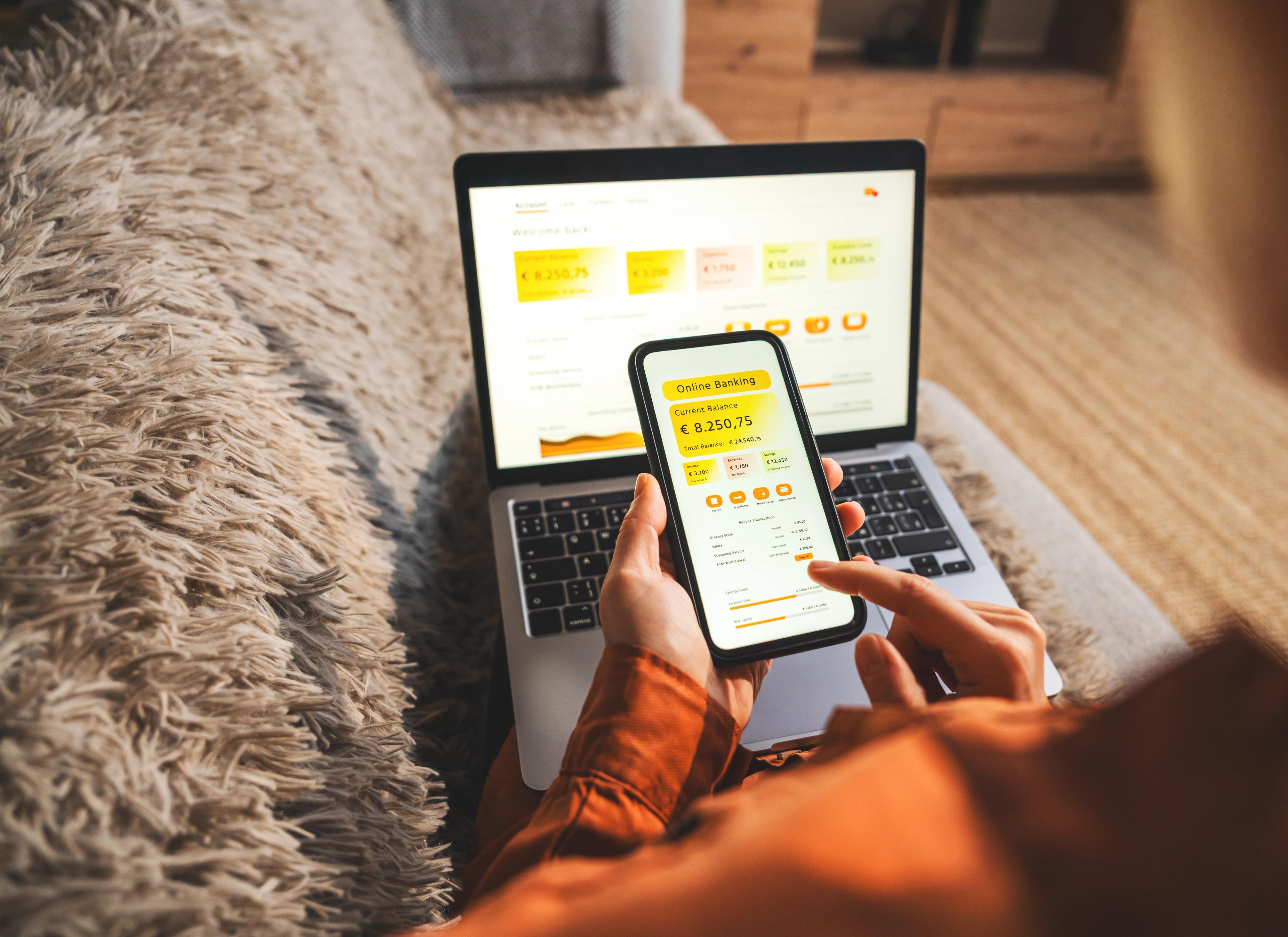

People in Germany use a banking app more than ever, yet the groups who use it most are rarely delighted. The Gini Mobile Banking Study 2026 shows where the frustration sits and what banks can do about it.
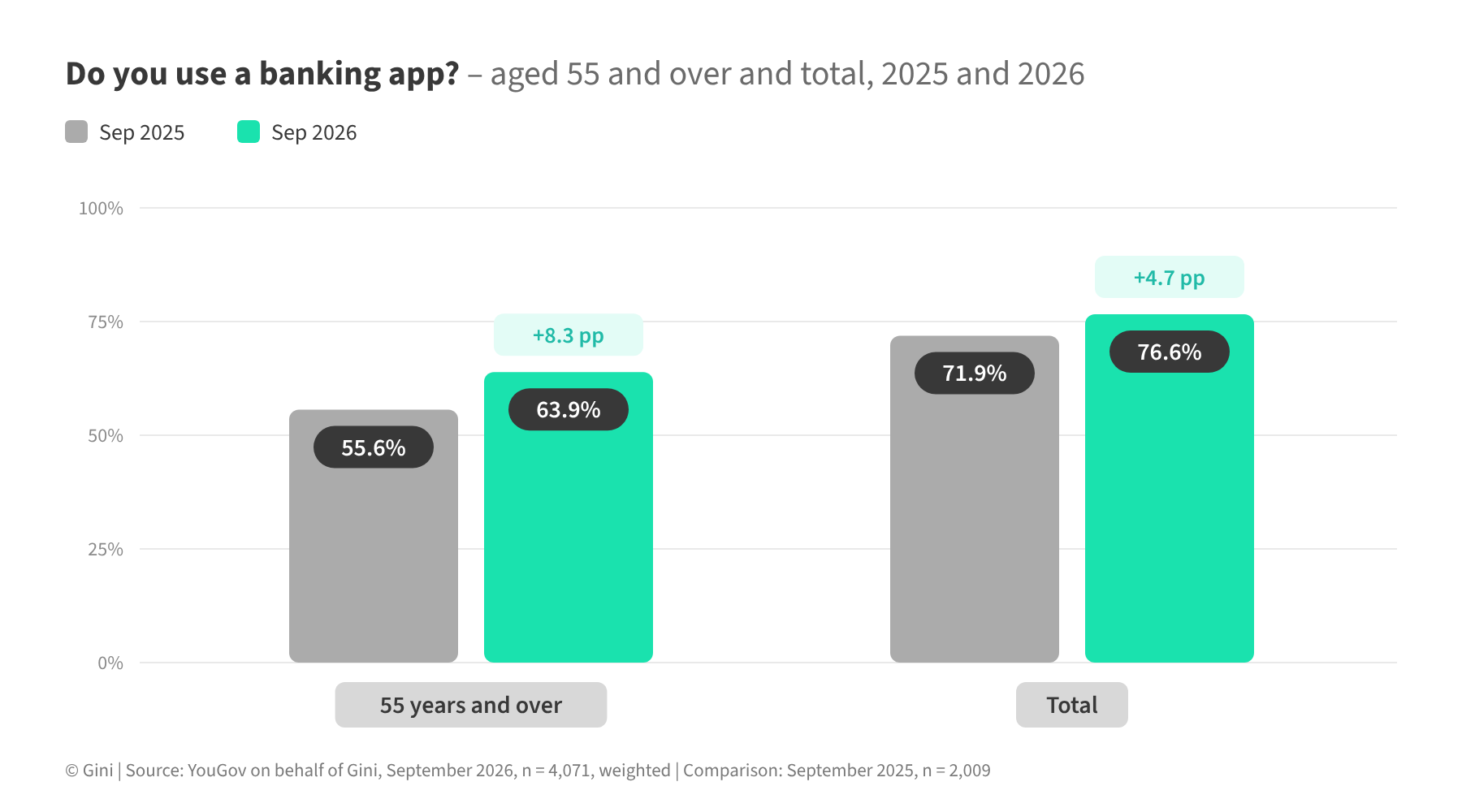
For most people in Germany, the banking app is the shortest route to their current account. 76.6% use an app, up from 71.9% a year ago. Anyone who concludes that heavy use means happy users will find the figures say otherwise.
The numbers come from a representative* YouGov survey of 4,071 people, commissioned by Gini and conducted in September 2026, broken down by age, generation and occupation. For anyone responsible for a banking app, the result is a little uncomfortable: students and Gen Z use the app more than anyone and are among those least likely to be very satisfied with it.
The growth comes from the over-55s
63.9% of people aged 55 and over now use a banking app, up from 55.6% in 2025. They are the only age group in which usage has risen significantly. The least has changed among 25- to 44-year-olds, where usage, at 86 to 92%, is practically at last year’s level.
For banks, that is good news with a task attached. The newcomers belong to the age group that most often types invoice details in by hand. Among over-55s who do not have their invoice details captured automatically, 70.7% type them in by hand, compared with 52 to 55% of 18- to 44-year-olds. Anyone entering a 22-character IBAN on a smartphone for the first time knows the worry of getting a digit wrong.
Students rely on the app most and are rarely delighted
A similar pattern appears when respondents are grouped by occupation. Two questions matter here: which channel someone mainly uses for their banking, and how satisfied app users are with their banking app. For 77% of students the app is the main channel, yet only 41% of students with an app are very satisfied with it. For retired people it is the other way round: 43% mainly use the app, 39% do not use one at all, and of those who do, 58% are very satisfied.
The self-employed are a case of their own. Fewer than half (46%) mainly use the app, and 55% mainly bank in the browser. Of those who do use the app, only 38% are very satisfied. Among people in work, they are the group the app reaches least.
Younger generations are harder to please
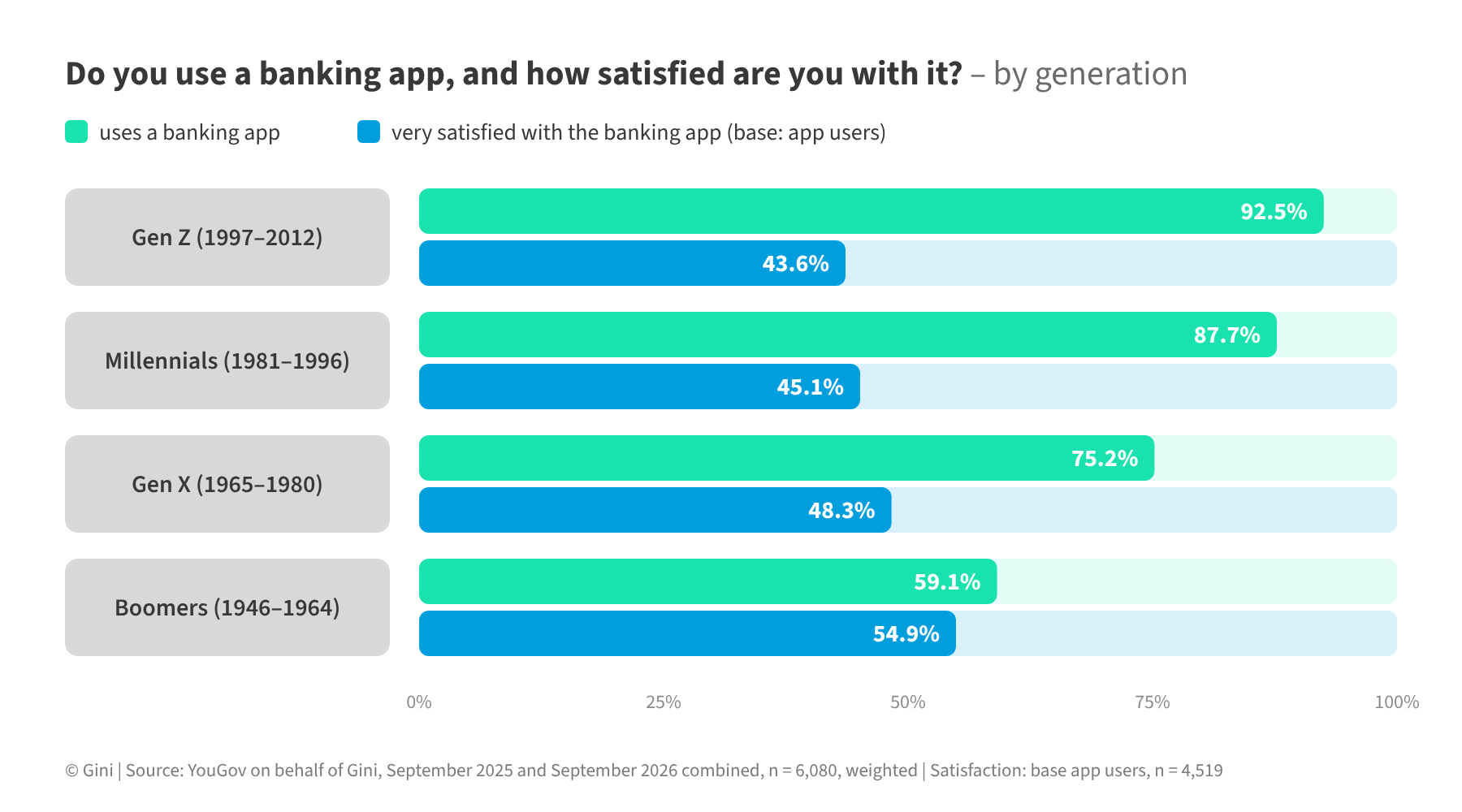
The same picture appears by generation: 54.9% of Boomers with a banking app are very satisfied with it, compared with 43.6% of Gen Z and 45.1% of Millennials. Millennials are the most critical group, with 8.8% dissatisfied. Among Boomers the figure is 3.3%.
Yet 92.5% of Gen Z use a banking app, compared with only 59.1% of Boomers. The large majority of younger users are not unhappy. In Gen Z, though, “somewhat satisfied” is the most common answer, and the gap between “somewhat” and “very” is the room a bank can still use.
Deep dive on banking app usage. Who uses the banking app, how often, for what and how satisfied are they? The deep dive shows all six analyses by age, occupation and generation. Download the deep dive here.
A bank transfer is where customers have to type
91.7% of app users check their balance and transactions at least once a month, and 78.8% make a bank transfer. No other function is used monthly by more than half of app users.
The two tasks differ in effort: a balance is read at a glance, and 65.4% do this at least once a week. A transfer asks more of the customer: the payee, IBAN, amount and payment reference all have to be right, and a mistake costs time and nerves. Two thirds of respondents (66.5%) are bothered by something when they pay an invoice by bank transfer.
Gini Mobile Banking Study 2026. What bothers customers when they pay an invoice, how secure they find the app and how they pay abroad is covered in the full study. Read the 2026 study here.
People want new features, but not everyone hears about them
69.2% of app users are interested in new features and improvements to their banking app, which is an open door for any product team. At the same time, almost one in five (18.9%) feels poorly informed about new features. A feature that saves typing only helps those who know it exists.
Where work on the app pays off
The analysis shows where improvements reach the most customers. It is the one task that almost everyone carries out and that requires them to enter details themselves. Older users who are new to the app and worry about typing errors gain confidence when that step disappears. In our view, so do the self-employed, who pay more invoices than most private customers.
With Gini’s photo payments [link product page], the banking app reads the IBAN, amount and payment reference from a photo or a PDF invoice, so nobody has to type an IBAN again.
* The data is based on an online survey by YouGov Deutschland GmbH on behalf of Gini, in which 4,071 people aged 18 and over from the YouGov online panel took part between 1 and 15 September 2026, representative of the population by age, gender and region. The results were weighted and are representative of the German population aged 18 and over. Comparison figures come from the surveys of September 2024 and September 2025.
Sources
- Gini GmbH (2026): Gini Mobile Banking Study 2026, deep dive “How people in Germany use their banking app”. Survey: YouGov Deutschland on behalf of Gini, September 2026, n = 4,071, weighted; comparison September 2025, n = 2,009; generations and app functions from both surveys combined.
- Gini GmbH (2026): Gini Mobile Banking Study 2026, main study (pain points when paying an invoice, typing in invoice details).
At Gini, we want our posts, articles, guides, white papers and press releases to reach everyone. Therefore, we emphasize that both female, male, and other gender identities are explicitly addressed in them. All references to persons refer to all genders, even when the generic masculine is used in content.